
Introduction
South Asia is witnessing an important diplomatic development as Nepal's Prime Minister Balendra Shah prepares for his first bilateral visit to India since winning the March 2026 elections.
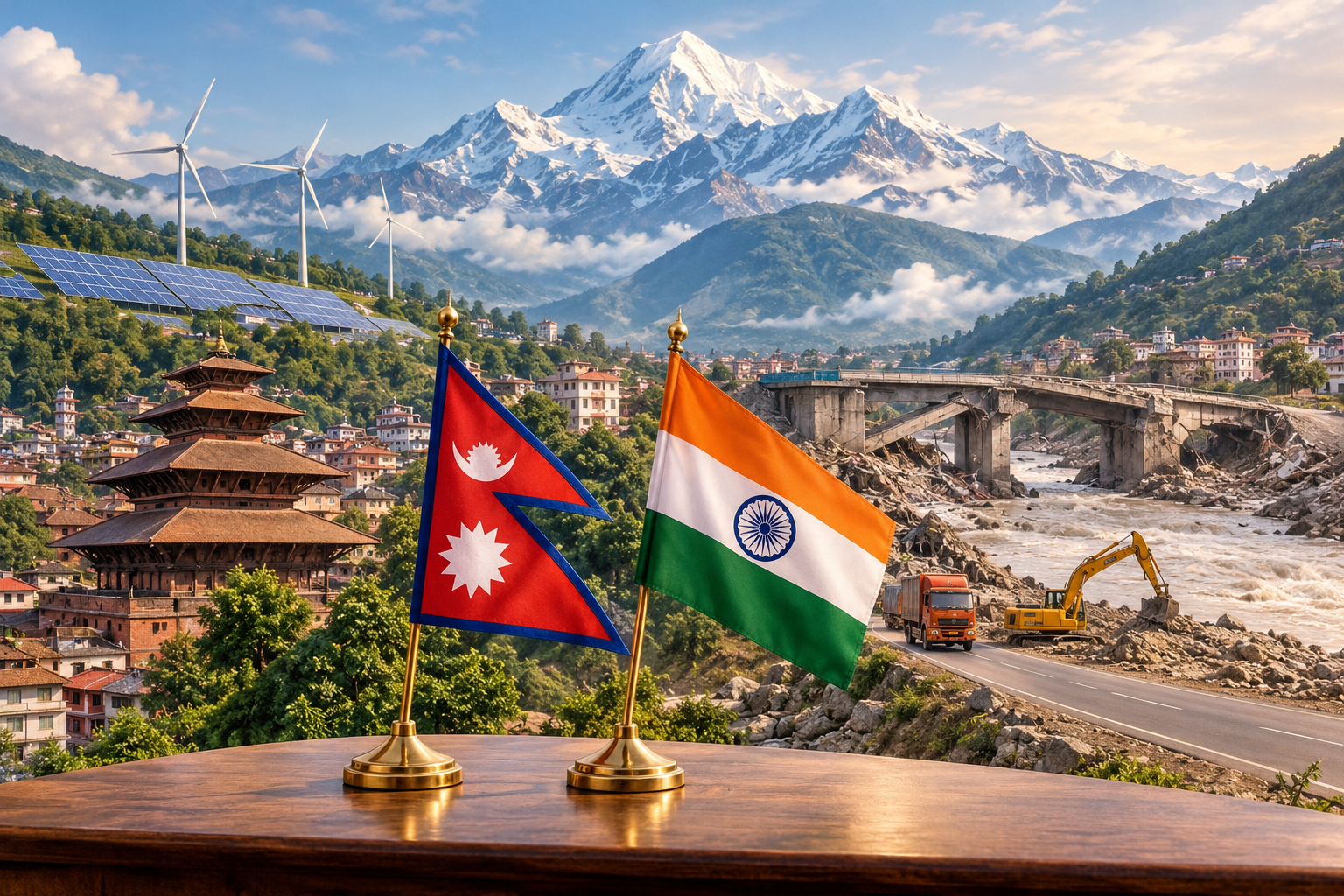
The two-day visit, scheduled to begin on November 23, is expected to strengthen diplomatic engagement between Kathmandu and New Delhi at a time when Nepal faces significant reconstruction challenges following devastating floods.
The meeting with Indian Prime Minister Narendra Modi is expected to focus on infrastructure development, trade, energy cooperation and India's assistance in rebuilding Nepal's damaged infrastructure.
This visit could become an important milestone in shaping the future of relations between two neighbouring countries with deep historical, economic and cultural connections.
1. Why is Nepal's Prime Minister visiting India?
India and Nepal share one of South Asia's most important bilateral relationships.
Their geographical proximity, open-border arrangements, cultural connections and economic interdependence make cooperation essential for both countries.
For Prime Minister Balendra Shah, the visit represents an opportunity to establish diplomatic priorities with India's leadership and discuss Nepal's development requirements.
According to Reuters, discussions are expected to cover:
-
Reconstruction assistance following Nepal's devastating floods.
-
Infrastructure and transportation development.
-
Bilateral trade and economic cooperation.
-
Energy partnerships.
-
Regional connectivity.
The visit will also include meetings with India's External Affairs Minister S. Jaishankar and President Droupadi Murmu.
2. Nepal's flood disaster makes reconstruction a priority
One of the most important issues surrounding this diplomatic engagement is Nepal's devastating August floods.
The disaster caused enormous damage to infrastructure, homes, agricultural land, roads and bridges.
According to Reuters' November 20 report, the floods killed approximately 1,500 people, with more than 5,200 reported missing.
Rebuilding damaged infrastructure is therefore a major challenge for the Nepalese government.
India, which was among the first countries to respond to the disaster, is expected to play an important role in reconstruction assistance.
Long-term cooperation could help Nepal strengthen its disaster preparedness, transportation infrastructure and energy security.
3. India and Nepal: Economic opportunities
The relationship between India and Nepal extends beyond traditional diplomacy.
India is Nepal's largest trading partner and an important source of investment, development assistance and connectivity.
Several areas offer opportunities for deeper cooperation:
Hydropower development: Nepal has considerable hydropower potential. Cross-border electricity trade could benefit both countries.
Transportation connectivity: Better roads, railways and cross-border infrastructure can improve regional trade.
Tourism: Religious, cultural and adventure tourism can create employment and strengthen people-to-people relationships.
Digital cooperation: Financial technology, digital public infrastructure and technology education could create new opportunities.
4. The China factor in South Asian geopolitics
Nepal occupies an important strategic position between India and China.
Both countries have interests in Nepal's infrastructure, connectivity and economic development.
Nepal's foreign policy therefore requires a careful balance between maintaining strong relations with India and developing economic partnerships with China.
For New Delhi, strengthening cooperation with Kathmandu is also important for regional connectivity and neighbourhood diplomacy.
However, sustainable diplomatic relationships require mutual respect for sovereignty and independent policy decisions.
5. What does this visit mean for South Asia?
The meeting comes at a time when regional cooperation is becoming increasingly important.
Climate-related disasters, economic uncertainty, infrastructure requirements and geopolitical competition are affecting countries across South Asia.
India and Nepal have an opportunity to demonstrate how neighbouring countries can cooperate on practical challenges.
The success of this engagement should not be measured only through diplomatic statements or official meetings.
It should also be evaluated through tangible outcomes:
-
Faster reconstruction of damaged infrastructure.
-
Improved cross-border connectivity.
-
Stronger energy partnerships.
-
Increased trade and investment.
-
Better disaster-management cooperation.
Conclusion: A diplomatic opportunity for a stronger neighbourhood
Prime Minister Balendra Shah's upcoming visit to India represents an important opportunity for Nepal and India to strengthen their bilateral relationship.
For Nepal, reconstruction, economic development and infrastructure connectivity remain urgent priorities.
For India, constructive engagement with Nepal is an important part of its wider South Asian neighbourhood strategy.
Ultimately, the future of Nepal–India relations will depend on how effectively both governments translate diplomatic discussions into practical cooperation.
At a time when South Asia faces significant economic, environmental and geopolitical challenges, stronger regional partnerships could become one of the region's greatest assets.